Talc-free setting powders: four-way wear test
A talc-free setting powder is not a single product category from a formulation standpoint. It is a packaging claim applied to several different absorbent systems.
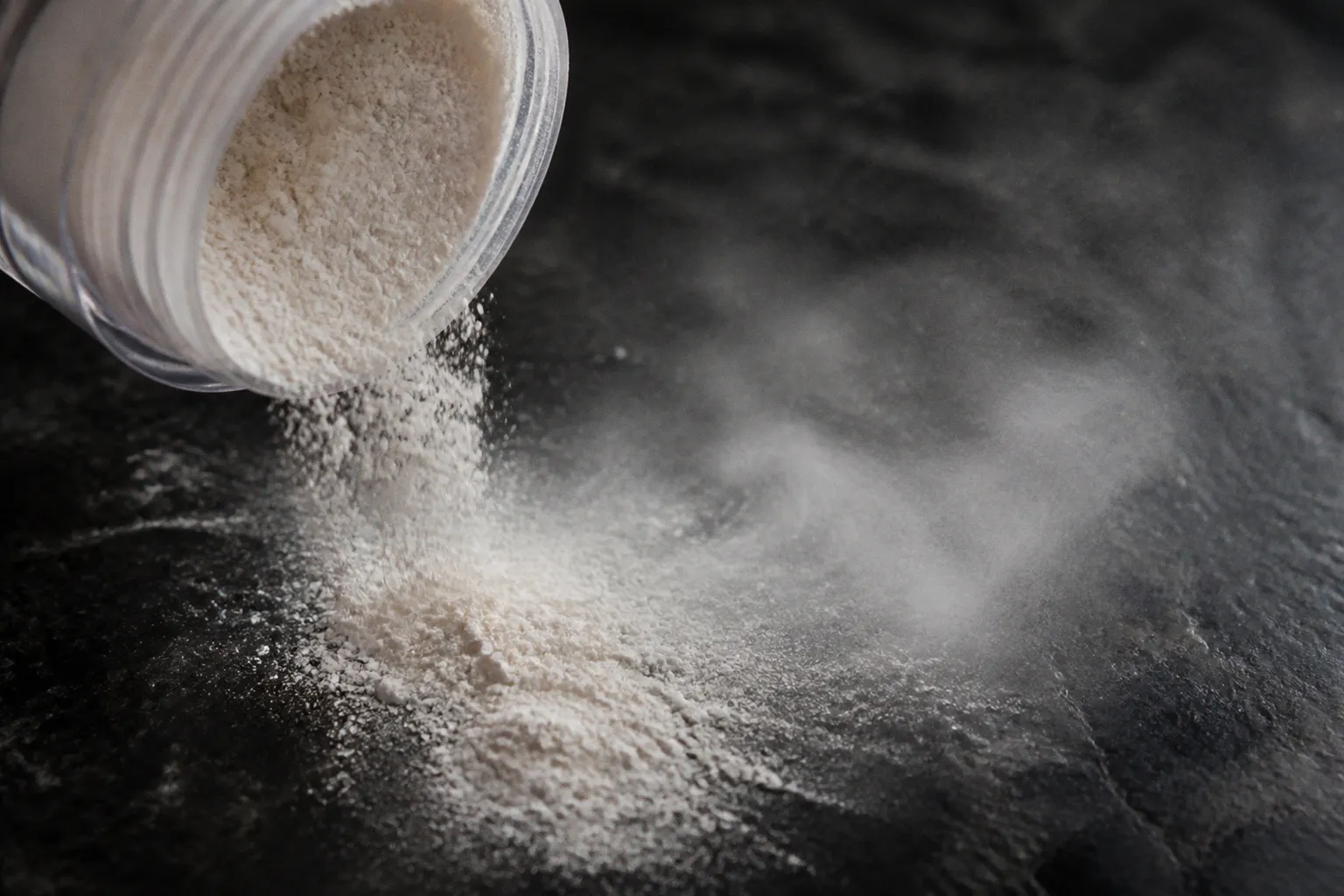
Silica, cornstarch, rice starch, bamboo-derived powders, and conditioning agents such as squalane produce different results on the skin.
For oily skin, the relevant question is not whether a powder contains talc. The relevant questions are narrower: how quickly does it absorb surface sebum, how evenly does it distribute over foundation, whether it settles into lines, and whether its optical particles create flashback under direct light.
This talc free setting powder oily skin comparison evaluates four formulation profiles: pure silica, starch-based powder, blended plant starch systems, and silica formulas modified with an emollient such as squalane. The comparison uses ingredient function, application behavior, wear claims, and known failure modes. It does not treat a brand’s stated 16-hour or 24-hour claim as an independently verified laboratory result.
The science of oil control without talc
Setting powder has two functions. It absorbs excess surface oil and reduces movement in foundation or concealer. It does not reduce sebum production. It does not change pore activity. The effect is limited to the film sitting on the epidermis.
Talc has historically been used because it provides slip, opacity, and a smooth powder texture. Concerns around talc in cosmetics relate to the possibility of asbestos contamination in naturally occurring deposits during mining and refining. That risk should not be converted into the claim that every talc-containing cosmetic is universally toxic. The relevant distinction is between refined cosmetic-grade material and contamination in an unrefined source.
Talc-free products replace talc with materials that behave differently:
- Silica has high oil-absorbing capacity and can create a soft-focus effect. It is effective in the T-zone but can produce visible dryness or flashback if overapplied.
- Cornstarch and rice starch absorb oil with a less glass-like finish. They can feel more substantial on the skin and may require more frequent touch-ups.
- Bamboo-derived powders are used as absorbent and texturizing agents. Their performance depends on particle size, processing, and the rest of the formula.
- Squalane does not absorb oil. In a powder formula, it acts as a conditioning component that can reduce the dry, tight finish associated with strong absorbents.
The chemical distinction is straightforward. Absorbents remove part of the liquid phase from the surface film. Emollients alter slip and reduce friction. Neither category suppresses the biological source of facial oil.
Talc-free describes what the formula excludes. It does not describe how the powder controls oil.
A powder can therefore be talc-free and still perform poorly on oily skin. It can also be talc-free and create a dry, heavy layer that breaks apart when combined with liquid foundation. The finished result depends on the ratio of absorbent to binder, particle morphology, pigment load, and application pressure.
Four talc-free powder systems compared
The table below separates the main formulation profiles used in clean setting powders. These are not interchangeable technologies.
| Powder system | Oil-control behavior | Finish | Main failure mode | Best application |
|---|---|---|---|---|
| Pure silica | Fast and strong absorption on the surface | Blurred, matte, often visually smooth | Dry patches, caking, flashback when overapplied | Pressed puff on oily areas; minimal amount elsewhere |
| Cornstarch or rice starch | Moderate absorption with more body | Soft matte, less translucent than pure silica | Shorter shine control and visible buildup | Thin brush layer or controlled puff application |
| Bamboo and starch blends | Variable absorption and texture control | Matte to natural, depending on particle size | Uneven distribution and settling if layered repeatedly | Small brush for broad areas; puff for the T-zone |
| Silica with squalane | Absorption combined with improved slip | Soft matte with less dry drag | May lose oil-control efficiency if the conditioning phase is too high | Puff pressed into oily zones, brush on drier areas |
1. Pure silica
Pure silica-based powders are the most direct approach to oil control. Silica particles create a large surface area relative to their mass. That allows the powder to bind part of the surface oil and reduce the wet appearance of the foundation film.
The benefit is immediate shine reduction. The limitation is dose sensitivity. A small amount can blur the appearance of pores and reduce movement around the nose. A larger amount can create a pale cast, emphasize dehydration lines, or produce flashback in photography.
The problem is not that all silica causes flashback. The problem is that optical scattering increases as the powder layer becomes denser. Particle size, surface treatment, and the amount applied all affect the result. A thin, well-pressed layer can be unobtrusive. A loose layer left on the skin can behave differently under a camera flash.
For oily skin, pure silica is the strongest candidate when the central requirement is immediate surface oil absorption. It is less suitable for dry cheeks or mature skin with pronounced lines unless application is restricted to the T-zone.
2. Cornstarch and rice starch
Starch-based powders are less aggressive in feel than pure silica systems. Cornstarch and rice starch can absorb surface oil while producing more tactile structure in the powder film. They are often used in formulas designed to avoid the very dry finish associated with high-silica compositions.
The trade-off is wear duration. There is no standardized, hour-by-hour comparison showing that cornstarch performs identically to silica under humid conditions or across different oily skin types. In practice, starch formulas may require earlier touch-ups when the skin produces a continuous oil load.
Starch also influences viscosity after contact with moisture and sebum. It can become more noticeable when repeatedly layered over foundation. This does not make starch unsuitable. It means that a second application should be targeted rather than distributed across the entire face.
A starch-based non toxic setting powder review should therefore assess more than the ingredient list. The relevant variables include whether the product remains finely milled, whether it leaves a visible white layer, and whether it interacts with the foundation’s film-forming agents.
3. Bamboo and mixed plant absorbents
Bamboo-derived powders and blends containing rice or corn starch occupy the middle of the category. They are usually selected to combine absorbency with a less stark finish. Their performance is difficult to predict from the plant source alone.
“Bamboo” is not a complete performance specification. It does not disclose particle size, surface treatment, concentration, or the ratio between bamboo material and other absorbents. The same label can describe formulas with different tactile and optical behavior.
Blended systems can be useful when a pure silica formula is too dry but a single-starch formula lacks sufficient oil control. They are also more dependent on manufacturing quality. Poor dispersion can create uneven coverage. Repeated brushing can then move the powder from oily zones to areas that do not require it.
These powders are better evaluated by distribution and texture than by the clean positioning of the formula. The raw material source does not establish a wear-time result.
4. Silica with squalane
Makeup By Mario Surrealskin Talc-Free Soft Blur Setting Powder is an example of a loose talc-free formula that incorporates squalane alongside an absorbent system. The formulation logic is clear: silica addresses surface oil, while squalane modifies slip and reduces the dry drag that can occur with a highly absorbent powder.
Squalane is not an oil-control active in this context. It does not counteract the sebaceous glands. It changes the powder’s interaction with the skin and the base underneath it.
This design can be useful when the face has two separate conditions: an oily T-zone and drier peripheral areas. It should not be interpreted as proof that every squalane-containing powder will control shine for the same duration as a pure silica powder. A conditioning phase may improve spreadability while reducing the aggressively matte character of the finished layer.
For combination skin, this is often the most technically balanced architecture. For very oily skin, the result depends on how much silica is present and how the powder is applied.
Application technique determines the wear result
The same formula can produce different results with a brush and a puff. The difference is mechanical.
A fluffy brush deposits a low-mass, discontinuous layer. This is useful for dry skin, light touch-ups, and areas where the foundation should retain some flexibility. It is less effective when the objective is to control oil in the central face.
A powder puff applies pressure. It pushes particles into the foundation film and creates a more continuous layer. On oily skin, that improves contact between the absorbent and the surface sebum. It also reduces the amount of loose powder left on top of the base.
The application sequence should be controlled:
1. Remove excess liquid before powdering. If foundation or concealer remains wet on the surface, powder can form a paste rather than a uniform film.
2. Load the puff, then remove excess. The puff should carry powder across its surface. It should not release a loose mound onto the skin.
3. Press rather than sweep. Pressing places the powder into the base. Sweeping can disturb foundation and create uneven coverage around the nose and mouth.
4. Concentrate on the T-zone. The forehead, sides of the nose, and chin usually need more oil control than the cheeks.
5. Use a brush only for residual powder. A soft brush can remove excess after the film has been pressed into place.
6. Reapply only where shine returns. Full-face layering increases texture and does not extend oil control proportionally.
The puff method is particularly relevant for pure silica. That formula can look smooth when applied in a thin pressed film and conspicuous when left loose. The application tool changes the effective concentration on the skin.
For dry skin, a fluffy brush is usually the safer option. A dense puff can overdeposit powder on areas with a compromised epidermal barrier, visible flaking, or low surface lipid content. The issue is not only comfort. Excess powder can emphasize microrelief and make the foundation appear discontinuous.
Flashback is an optical problem
Flashback occurs when the powder layer reflects or scatters light differently from the surrounding skin. Silica is associated with this issue because of its optical properties, but the presence of silica alone does not prove that a product will create flashback.
The risk increases with:
- a high powder load on the skin;
- incomplete blending after application;
- concentrated silica particles on the high points of the face;
- direct flash photography;
- a pale or strongly translucent formula applied over a deeper foundation shade;
- repeated touch-ups that create a thick dry film.
A clean setting powder flashback test should use more than a single photograph. The face should be examined in ordinary indoor light, daylight, and direct flash. The amount applied should reflect normal use. Testing with an excessive layer answers a different question: whether the formula can look excessive when used excessively.
The absence of flashback in one image also does not establish universal safety. Camera angle, exposure, flash intensity, and the amount of product all change the outcome. A formulation can be invisible in a normal portrait and still appear lighter under a strong direct flash.
The practical method is conservative. Apply less powder to the cheekbones and upper face. Use the highest concentration only where oil destabilizes the base. Remove residual loose particles with a clean brush. If photography is expected, test the exact amount and lighting before applying the final layer.
Wear time: what the claims do and do not show
Longwear powders commonly advertise 16-hour wear. Some high-performance formulas claim up to 24-hour shine control. These numbers are product claims, not universal performance standards. They do not establish that every user will receive the same duration, and they do not show how the formula behaves on different foundation types.
Wear depends on the entire base system:
- the emulsion type of the foundation;
- the film-forming ingredients;
- the amount of skincare or sunscreen beneath makeup;
- ambient humidity;
- sebum production;
- friction from glasses, masks, hands, and hair;
- the thickness of the powder layer.
A powder can preserve foundation position while allowing some surface shine to return. Those are separate outcomes. “Setting” refers to reducing movement. “Oil control” refers to absorbing visible surface sebum. A formula may perform one function more effectively than the other.
Loose powders generally provide more buildable oil control because the user can vary the amount and placement. Pressed powders provide better portability and more controlled touch-ups. The compact format is not automatically weaker. It simply creates a different dosing mechanism. The harder pressed matrix may deposit less product per pass, which is useful when correcting shine without adding a dense layer.
The following ranking reflects formulation behavior rather than a universal numerical score:
| Performance requirement | Most suitable system | Limitation |
|---|---|---|
| Maximum T-zone oil absorption | Pure silica | Higher risk of dryness and flashback if overdosed |
| Lower-dryness matte finish | Squalane-modified silica | May not be sufficient for very high sebum output |
| Softer powder film | Cornstarch or rice starch | Shine may return earlier |
| Portable midday correction | Pressed starch or silica blend | Less adjustable than loose powder |
| Combination skin | Silica with a conditioning phase | Requires regional application |
| Photography-sensitive use | Fine starch blend or controlled silica layer | Must still be tested under direct flash |
Product cost does not predict the absorbent system
Crunchi Translucent Finishing Powder is listed at a $36 price point. Makeup By Mario Surrealskin Talc-Free Soft Blur Setting Powder is listed at $38. The narrow price difference does not establish equivalent performance, and the price does not reveal the concentration of the active absorbent.
A higher price may reflect packaging, distribution, formulation development, shade design, or brand positioning. It does not provide a direct measurement of oil absorption, particle dispersion, or flashback risk.
The correct comparison is compositional and functional:
- Which absorbent appears in the formula?
- Is the powder loose or pressed?
- Does the product prioritize oil control or reduced dryness?
- Does the powder create a translucent film or add visible pigment?
- Can the application be localized to the T-zone?
- Does the product’s claim refer to wear, shine control, or both?
The clean beauty category often uses “talc-free” as the primary distinction. That is insufficient for a technical comparison. A talc-free powder with a high silica load can be more drying than a talc-based powder with a softer, more lubricious film. A starch-based product may be more forgiving but require more frequent intervention.
The practical verdict
For oily skin, pure silica remains the most direct talc-free option for surface sebum control. It should be applied in a thin pressed layer and concentrated on the T-zone. Its main liabilities are overdosing, visible dryness, and possible flashback.
For combination skin or users who dislike a rigid matte film, a silica formula with a conditioning component such as squalane is more balanced. It does not eliminate oil. It moderates the powder’s interaction with the skin.
Starch-based and bamboo-blend powders are reasonable when texture and lower dryness take priority over maximum shine duration. They should not be selected on the assumption that every plant-derived absorbent has the same efficacy as silica. The evidence does not support that conclusion.
Pressed formulas are better for controlled touch-ups. Loose formulas are better for adjustable initial application. In both formats, the application tool has a material effect on the result. Use a puff for oily zones. Use a brush for a lighter layer on dry areas.
The binary conclusion is clear: choose pure silica when oil control is the primary requirement; choose a starch or conditioned silica system when film flexibility and reduced dryness matter more. “Talc-free” identifies the absence of one ingredient. It does not replace performance analysis.