Magnetic Lashes: Are They Worth the Money and Effort?
Magnetic eyelashes promise a cleaner alternative to traditional falsies: no lash glue, no sticky strip pressed against the skin, and a pair that can be worn again and again.
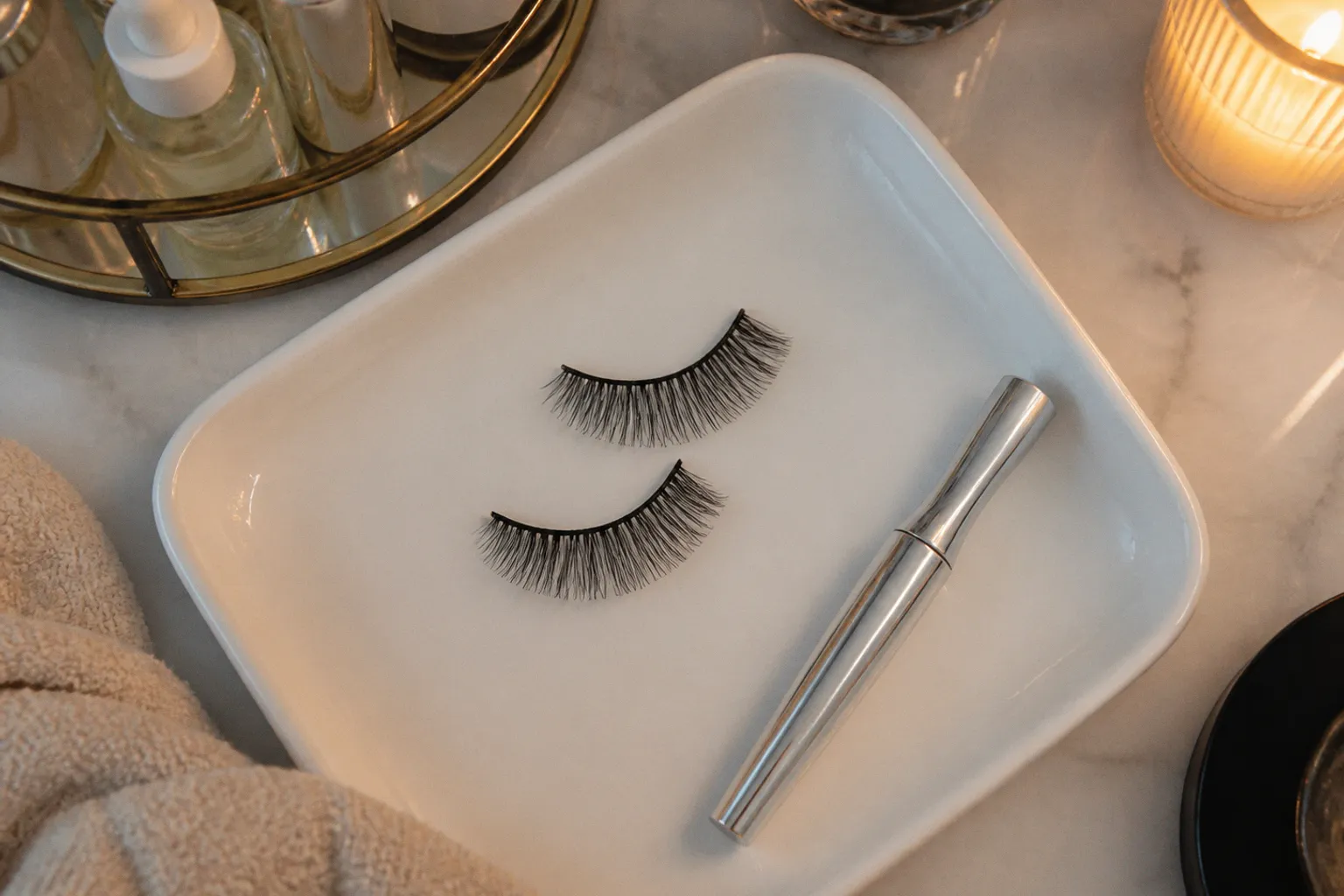
That sounds especially appealing if your eyes are sensitive or if you enjoy a defined, expressive eye look but dislike the removal ritual that follows.
The honest answer to whether a magnetic eyelashes kit is worth it is conditional. Magnetic lashes can be a thoughtful investment for someone who wears false lashes regularly and is willing to practice application. They are less convincing for occasional users, beginners who expect instant perfection, or anyone looking for a completely effortless option. The environmental and financial advantages are real, but they depend heavily on how well you care for the lashes and whether the attachment system suits your hand.
The evolution of glue-free beauty
Magnetic eyelashes entered the beauty market in 2014, when Katy Stoka, founder of One Two Cosmetics, introduced a glue-free attachment method using tiny magnets. The idea was simple but genuinely useful: instead of bonding a lash strip to the eyelid with adhesive, the lashes would hold to one another or to a magnetic eyeliner.
That distinction matters because traditional lash glue is often the part of the routine that causes the most frustration. It can feel tight as it dries, leave residue along the lash line, and become uncomfortable when removed. For people with reactive skin or sensitive eyes, the problem may be more than inconvenience. Adhesive formulas can trigger irritation, and rough removal can pull on natural lashes.
Magnetic systems reduce that particular source of stress. They do not eliminate every possible sensitivity concern, and they are not automatically suitable for every eye. But they offer a different lifecycle: one set can potentially be worn approximately 20 to 30 times, while traditional glue-on false lashes are often used around 5 to 10 times. Some soft magnetic lash manufacturers claim far higher reuse counts, but those numbers vary substantially with construction, storage, cleaning, and the condition of the magnets.
That reuse is where the sustainability argument becomes more practical than aspirational. A lash that survives dozens of wears has a smaller footprint per occasion than a disposable strip used once or twice. Still, the benefit only appears if the kit becomes part of your actual routine. Buying magnetic lashes and abandoning them after two difficult applications does not create a more sustainable beauty ritual; it simply adds another half-finished product to the drawer.
Magnetic lashes are not automatically a lower-waste choice. Their advantage comes from longevity, and longevity comes from care.
The other environmental consideration is the complete product lifecycle. The lash band, fibers, magnets, eyeliner packaging, applicator, and eventual disposal all contribute to the footprint. A reusable pair is a more promising starting point than a single-use strip, but “reusable” should not be treated as a guarantee. The quality of the band and the strength of the magnets influence how long the set remains comfortable and functional.
Two magnetic systems, two very different routines
Most magnetic lash kits use one of two attachment methods. The first is the sandwich style, in which two lash strips connect around your natural lashes. The second uses a single lash strip that attaches to magnetic eyeliner painted along the upper lash line.
Neither design is universally better. They solve different problems and have different learning curves.
| Feature | Sandwich-style magnetic lashes | Magnetic eyeliner lashes |
|---|---|---|
| How they attach | Two magnet-embedded strips hold natural lashes between them | A single magnetic lash band attaches to liner containing iron oxide |
| What you apply first | Usually no liquid liner is required | Magnetic liquid or gel liner is part of the system |
| Main challenge | Aligning the upper and lower strips without pinching or missing the natural lash line | Creating an even liner shape and allowing it to set before placing the lash |
| Best suited to | People who want to avoid eyeliner or prefer a more mechanical attachment | People who already enjoy winged or defined liner |
| Removal | Separate the magnetic strips gently | Remove the lash, then dissolve the liner with an oil-based remover |
| Cleanup | Usually simpler, although lash bands still need care | More involved because pigment and liner residue can remain along the lid |
The number of magnets also varies. Some systems use around 10 micro-magnets per lash band, while others use between 3 and 8. More magnets can provide additional points of contact, but they do not automatically make a lash comfortable or easy to apply. Placement, band flexibility, lash weight, and the curve of the strip are just as important.
A sandwich system may look wonderfully minimal on paper because it avoids liquid liner. In practice, the two-piece alignment can be fiddly, especially when the lash band is stiff or the magnets do not line up naturally with your eye shape. It can also feel more noticeable if the paired strips are heavy.
Liner-based kits usually give a more familiar visual finish. You can shape the liner, camouflage the lash band, and place the lashes where you want them. The trade-off is that the eyeliner becomes a separate product to learn, maintain, and remove. If you already wear eyeliner, this version may fit seamlessly into your routine. If you rarely use it, the liner can make magnetic lash application feel like learning two techniques at once.
In my own approach to eye makeup, I think of the attachment method as a daily-routine decision rather than a technology decision. The best system is the one that matches the way you already get ready. A person who prefers a bare lid may be happier with sandwich strips. Someone who reaches for a clean eyeshadow palette and liquid liner most mornings may find the liner-based option more intuitive.
Magnetic eyeliner safety and sensitive eyes
The word “magnetic” can make a cosmetic feel more complicated than it is. In magnetic eyeliner, the attraction typically comes from iron oxide, a mineral pigment regulated by the FDA for cosmetic use around the eye area under 21 CFR §73.2250. That regulation supports its permitted cosmetic use, but it does not mean every formula will feel comfortable for every person.
Iron oxides can still trigger individual allergies or sensitivities. A product should not be described as completely hypoallergenic simply because it is glue-free. The other ingredients in the liner matter too, including preservatives, film-forming agents, solvents, and fragrance if present. The finish may also affect comfort: a liner that dries rigidly can feel more noticeable on a delicate lash line than a flexible gel formula.
For sensitive eyes, I look at the entire experience:
- Whether the kit uses adhesive at all, and whether the formula contains ingredients you already know your skin dislikes.
- How easily the lash can be removed without pulling or repeated rubbing.
- Whether the eyeliner flakes, transfers, or leaves a tight film as it dries.
- How much pressure is needed to position the lash accurately.
- Whether the lash band touches the inner or outer corner and causes persistent friction.
- How carefully the product can be cleaned and stored between wears.
A glue-free attachment can reduce the risk of adhesive-related irritation and natural lash damage, but it cannot remove the possibility of mechanical irritation. A magnet that pinches, a stiff band that scratches, or a liner that remains tacky may be just as distracting during a long day.
The American Academy of Ophthalmology confirms that magnetic eyelashes can be worn safely when used correctly. There is one non-negotiable exception: magnetic lashes should never be worn during an MRI scan. Tell the imaging team that you are wearing them and remove the lashes before entering the scanner environment. This is not a place for convenience or guesswork.
I would also avoid applying any eye product over inflamed skin, a current eye infection, or a flare of eyelid dermatitis. “Clean” and “natural” are not synonyms for risk-free. The eye area is thin, mobile, and close to the mucous membrane, so a calm, conservative routine is usually the most nourishing choice.
The application difficulty is real
The biggest weakness in magnetic lash kits is often not the concept but the promise of instant ease. Magnetic lash application can become quick and seamless, but most beginners need practice before it feels that way.
The difficulty usually comes from three points:
1. The lash must sit in the right place.
It needs to be close enough to the natural lash line to look integrated, but not so close that it touches the wet inner rim of the eye. If the outer corner lifts or the inner corner sits too far inward, the lash will feel obvious even when the rest of the makeup is polished.
2. The band may need shaping.
A lash strip that does not follow your natural curve can pull at the corners or create gaps. Gently flexing the band before application can help, but excessive bending may affect the structure of the strip or the magnets.
3. The liner needs the right amount of setting time.
With a liner-based kit, applying the lash while the liner is still wet can lead to sliding and uneven placement. Waiting too long can make the surface less receptive. The ideal timing depends on the formula, so the process involves a little trial and observation rather than one universal rule.
I find it helpful to treat the first few applications as technique-building rather than a test of whether the product works. Begin with a shorter, lighter lash style rather than a dramatic full-volume band. Trim only from the outer edge if adjustment is needed, and make small changes. Trimming from the inner edge can remove the section designed to sit comfortably near the tear duct.
A mirror placed slightly below eye level can make placement easier because it allows you to look down without closing the eye completely. For liner-based kits, I prefer applying the magnetic liner in a controlled, moderately thin line first, then building it only where the lash needs additional contact. A thick line may offer more surface area, but it can also feel heavier and make removal more laborious.
The applicator included in a kit is not automatically an upgrade. Some people find it gives them a better grip; others have more control with clean fingers or a conventional lash tool. The key is not the accessory but the pressure. Magnetic lashes should not require forceful pressing or repeated repositioning across the eyelid.
A good sign is that the lash settles into place with light contact. A bad sign is the need to pinch, tug, or keep adjusting because the band never feels stable.
Reusable magnetic eyelashes cost: where the value appears
The price of magnetic lashes can look high beside a single pair of traditional falsies. In the research available for this category, magnetic pairs commonly fall around the $15–$30 range, with an average reuse estimate of approximately 20 to 30 wears. That works out to a rough lash-only cost of about 50 cents to $1.50 per wear before considering eyeliner, remover, or replacement accessories.
The calculation is useful, but it should not be treated as a guarantee. A pair worn 30 times is a very different purchase from a pair that loses its shape after a handful of applications. Longevity depends on:
- The quality and flexibility of the lash band.
- Whether the magnets remain firmly embedded.
- How much mascara or eyeshadow builds up on the fibers.
- Whether the lashes are removed without bending or pulling the band.
- How they are stored between wears.
- Whether the eyeliner is cleaned from the magnets and band after use.
Traditional glue-on lashes may cost less at the point of purchase, but the comparison changes if you wear falsies often. A person who uses lashes for events only a few times a year may not notice meaningful savings. A regular wearer may appreciate buying one durable pair instead of repeatedly replacing single-use strips.
There is also a hidden cost in liner-based systems: the magnetic eyeliner itself. If the liner dries out, becomes thick, or develops residue around the opening, the lashes may stop attaching smoothly even though the lash band is still in good condition. In that situation, the kit is not finished, but one component may need replacement.
The most sustainable approach is to purchase a style you will genuinely wear. An extravagant pair that looks beautiful in its packaging but feels too heavy for your eyes has no practical longevity. For everyday use, a flexible, moderate-density band often offers more value than a dramatic style with a short window of comfort.
Cleaning is part of the investment
Magnetic lashes need a small maintenance ritual. This is not elaborate, but skipping it can shorten their lifecycle and make the next application less comfortable.
After removal, I would first lift away visible makeup from the lash band with a clean cotton swab or a soft, lint-free tool. Avoid soaking the entire lash unless the manufacturer specifically permits it. Excess moisture can affect the band, loosen adhesive components used in the lash construction, or make storage less hygienic.
Magnetic eyeliner requires particular attention. Standard water or micellar wipes may remove surface makeup but leave behind sticky or pigmented residue. An oil-based makeup remover is generally more effective for breaking down the liner. Apply it carefully along the lash line, allow the product a moment to dissolve, and wipe without scrubbing. For sensitive eyes, a fragrance-free remover with a simple formula may be more comfortable than a heavily scented cleansing oil.
The magnets themselves should remain clean enough to make full contact. Residue can create a tiny gap between the lash and liner, which encourages sliding and leads to more repositioning. More repositioning means more handling, and more handling can gradually distort the band.
Storage is equally important. Return the lashes to their original case or a clean protective container so the fibers keep their shape. Do not leave them loose in a makeup bag where they can collect powder, bend at the corners, or come into contact with unclean tools.
Replace a pair when the band has changed shape, the fibers look damaged, the magnets no longer hold consistently, or the lashes cause discomfort despite careful placement. Reuse is valuable, but extending a product past its hygienic or structural lifespan is not a sustainable choice.
The real test of a magnetic lash kit is not the first dramatic reveal. It is whether the pair still feels comfortable, clean, and easy to place after repeated wear.
Magnetic lashes pros and cons, without the beauty hype
After separating the technology from the marketing, the advantages are fairly clear.
What magnetic lashes do well
- They avoid traditional lash glue, which may be helpful for people who experience adhesive-related irritation.
- They can reduce repeated tugging during removal when the magnetic system releases cleanly.
- A well-maintained pair may be reused approximately 20 to 30 times, lowering the per-wear cost.
- Liner-based styles can create a defined lash line while attaching the false lash in the same step.
- The concept works well with expressive eye makeup, from a soft clean liner to a more structured evening look.
- They create an opportunity to build a lower-waste beauty ritual when the wearer uses and maintains the pair consistently.
Where they ask more from you
- Application has a learning curve and may be frustrating at first.
- Sandwich-style lashes can be difficult to align, particularly for beginners.
- Magnetic eyeliner adds another product to apply and remove.
- Oil-based remover is often needed to clean liner residue properly.
- Iron oxide and other formula ingredients can still cause individual sensitivity.
- A magnetic lash is not automatically lighter, more comfortable, or more natural-looking than a traditional strip.
- They cannot be worn during an MRI scan.
- Reuse claims vary widely, and very high manufacturer claims should be treated as product-specific rather than universal.
This is why I would not rank magnetic lashes as a simple replacement for every type of false lash. They are better understood as a reusable system with its own ritual. For the right wearer, that ritual becomes efficient and satisfying. For someone who wants a once-a-year accessory with no preparation, traditional falsies may remain the simpler choice.
So, is a magnetic eyelashes kit worth it?
For regular lash wearers, especially those who dislike glue, a magnetic eyelashes kit can be worth the investment. The strongest case is practical: fewer adhesive concerns, a reusable format, and a lower potential cost per wear when the lashes are cared for properly.
For sensitive eyes, the answer needs more nuance. A glue-free design may be helpful, but it is not a blanket safety promise. Check the full ingredient list of the magnetic eyeliner, patch test cautiously where appropriate, stop using the product if irritation develops, and remember that mechanical friction can be as relevant as the formula itself.
For beginners, I would choose a lighter style, a flexible band, and a kit with clear care instructions rather than the most dramatic option. Expect a handful of practice sessions. The first application is not a fair measure of the product’s long-term value.
My verdict: magnetic lashes are worth it when longevity and glue-free wear matter more to you than instant application. They are a considered purchase, not a shortcut. The best pair will fit your eye shape, your makeup habits, and your tolerance for maintenance. With gentle removal, effective liner cleanup, and protective storage, the lashes can become a refined part of an expressive eye routine rather than another beauty product that quietly loses its place in the drawer.