Bamboo vs synthetic makeup brushes: choosing for sensitive skin
If your skin flushes, stings, or feels tight after makeup, the brush may be part of the problem. But “bamboo versus synthetic” is not quite the choice it sounds like: bamboo usually describes the handle, while synthetic describes the bristles.
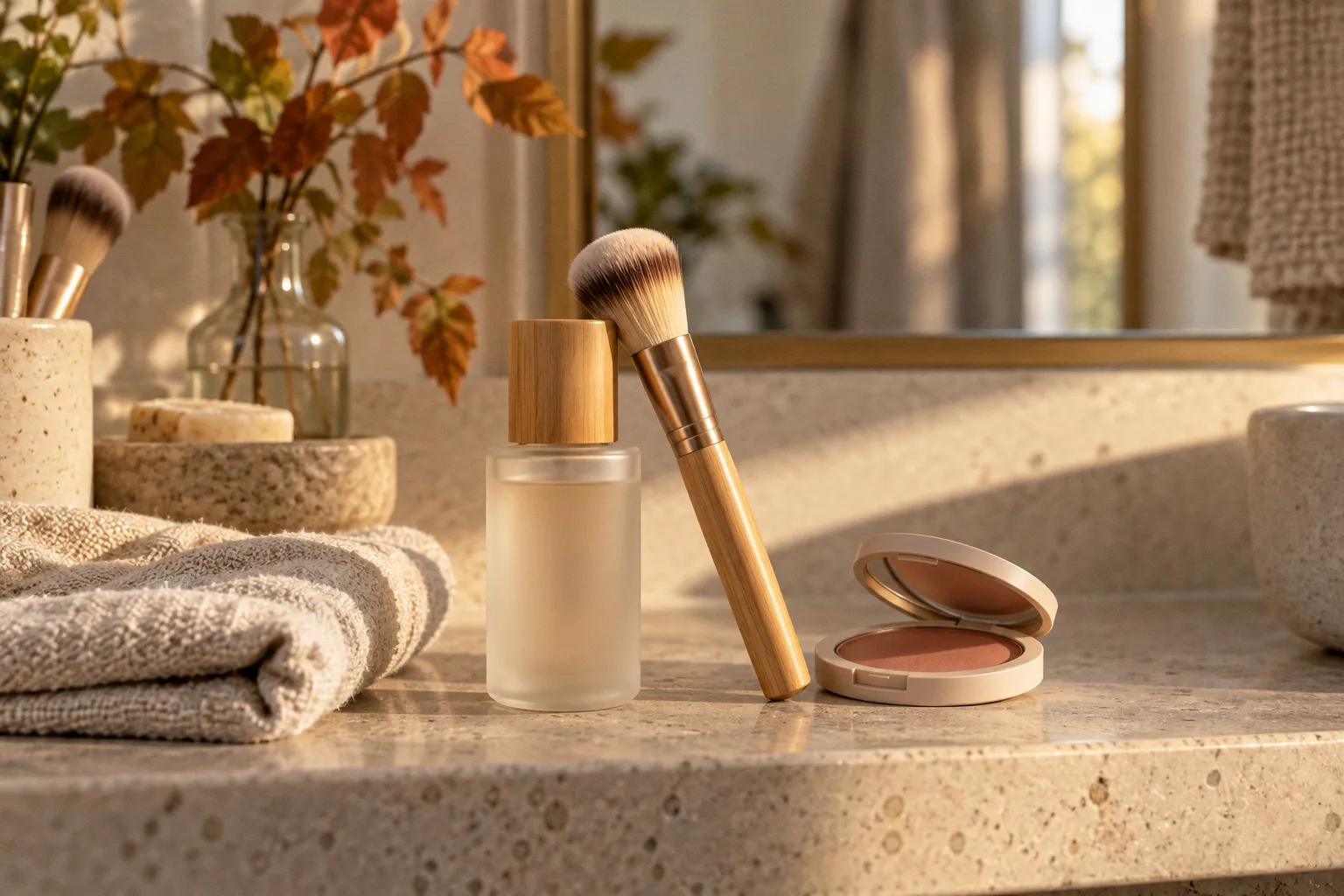
A brush can have both.
For sensitive skin, the fibers touching your face deserve the closest attention. Soft, well-made synthetic bristles are often a comfortable option because their smooth, non-porous surface is less likely than natural hair to hold moisture, dead skin cells, or residue. The handle still matters—it affects a tool’s footprint and longevity—but it cannot make scratchy bristles feel gentle.
Debunking the bamboo-versus-synthetic brush myth
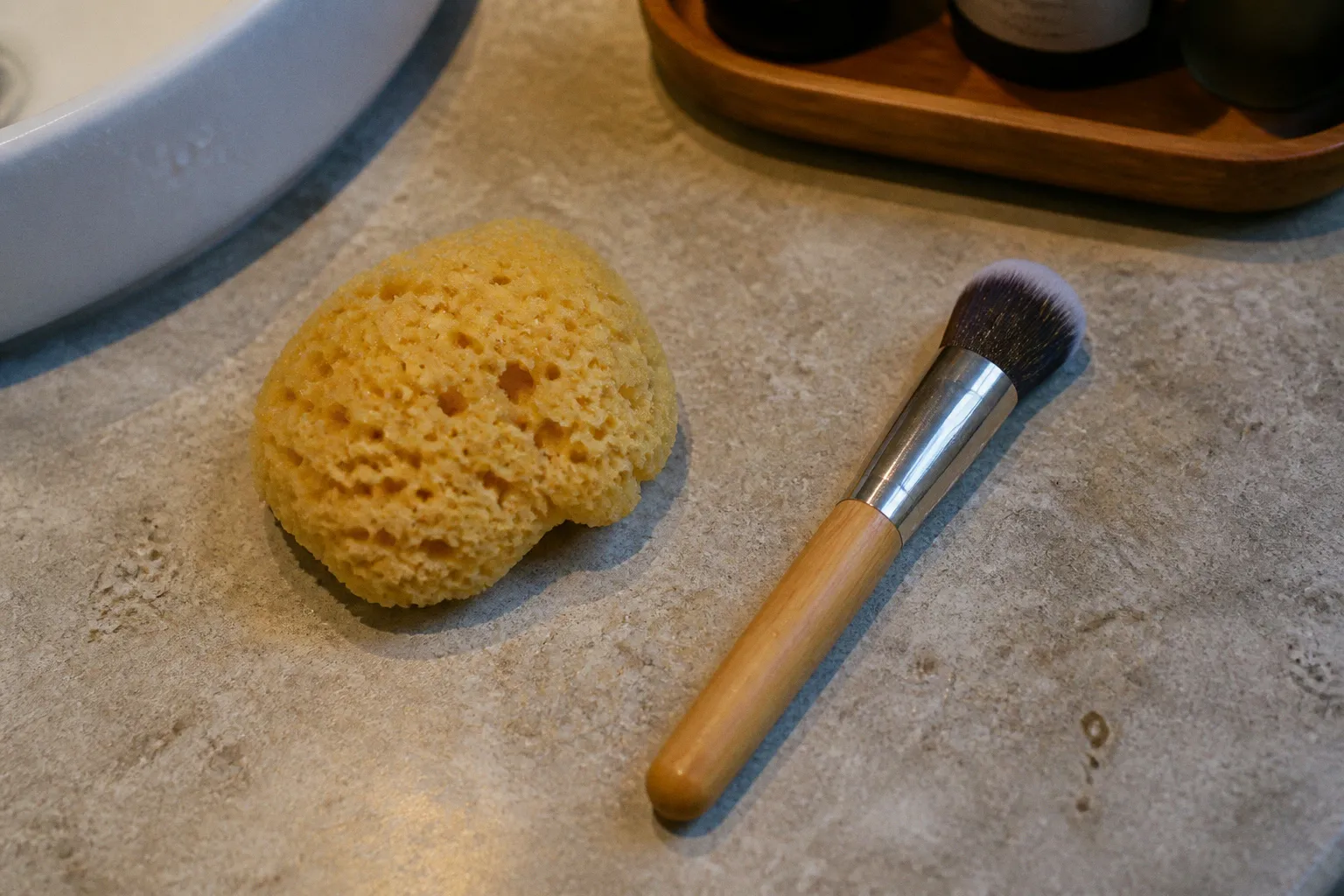
The labels sit on different parts of the brush. Bamboo is a material used for the handle; synthetic fibers such as Taklon, PBT, or nylon make up the bristles. So an eco-friendly brush with a bamboo handle and vegan bristles is not an unusual compromise. It is a common way to combine a renewable handle material with fibers designed for makeup application.
That distinction is useful when shopping. If a product page says “bamboo brush,” look for a separate description of the bristles. “Bamboo” alone does not tell you whether the brush is vegan, how soft it feels, or how it will behave with your skin. If animal-free materials matter to you, seek a clear statement about the fiber itself rather than relying on the handle description.
| Brush feature | Bamboo handle | Synthetic bristles |
|---|---|---|
| What it describes | The brush handle | The fibers that touch and apply makeup |
| Common role | Renewable material in tool construction | Vegan alternative to animal hair |
| Skin-contact relevance | Usually indirect | Direct: softness and friction affect comfort |
| Care consideration | Keep the handle from staying wet | Wash regularly and let fibers dry fully |
When I’m weighing an eco-friendly brush material comparison, I separate the question into two parts: what touches the skin, and what the tool is made from overall. That keeps the conversation practical rather than turning one material into a promise about the whole brush.
“Bamboo” may tell you something about the handle. It tells you very little about how the bristles will feel on reactive skin.
Why non-porous synthetic fibers can suit reactive skin
Natural animal hair has cuticles—tiny overlapping structures along the fiber. Synthetic fibers do not have those animal-hair cuticles, and their smoother, non-porous surface is generally less prone to holding moisture, bacteria, and product residue. That does not make a brush self-cleaning, or remove the need to wash it. It does make synthetic bristles a sensible starting point for someone trying to reduce avoidable sources of irritation.
There is another consideration: animal hair can trigger allergies to animal proteins or contribute to contact dermatitis in some people. A vegan synthetic brush avoids that particular exposure. If your skin reacts to many products or tools, though, no material label can guarantee that a brush will agree with you. Fragrance in a cleanser, leftover makeup, a rough ferrule edge, or simple pressure can all affect comfort.
The best sustainable brushes for reactive skin are not necessarily the softest-looking ones in a product photo. When you can, check how the maker describes the fiber texture and density, and pay attention to reviews that mention sensitive skin without treating that as a universal result. A dense brush can distribute product smoothly, but if its fibers are stiff or the user presses hard, density alone will not make application gentle.
Synthetic does not automatically mean soft
Synthetic fiber makeup brush quality varies. The word “synthetic” identifies a broad family of materials, not a consistent level of softness, shape retention, or finish. Two brushes can both be vegan and feel very different on the cheek.
I’d look for fibers that feel flexible at the tips rather than blunt or wiry, with a shape suited to the product. A soft, rounded brush can diffuse powder with a light sweep; a compact brush may be useful for precise cream placement, but it can invite more pressure if you buff aggressively. For reactive skin, a seamless application is usually less about owning a large set and more about choosing a few tools that do their jobs without repeated dragging.
If you are unsure, try the brush on the inside of your forearm with a feather-light touch before using it on a flushed area. This is not an allergy test, and it cannot predict every facial reaction. It can, however, reveal an obvious scratchy feel before you build the brush into your routine.
What bamboo contributes to a sustainable brush
Bamboo is renewable and is used for handles because it offers a plant-based alternative to some conventional handle materials. Its presence can be one thoughtful part of a tool’s lifecycle, especially when the brush is made well enough to stay in rotation. A handle’s material alone does not tell you the full footprint: the fibers, adhesives, ferrule, packaging, manufacturing, and how long you keep the brush all contribute.
Bamboo also needs sensible care. While the material has natural antibacterial properties, that is not a substitute for cleaning the bristles or drying the brush properly. The handle should not be left soaking in a sink or stored damp. Water that repeatedly reaches the ferrule or joint can shorten a brush’s useful life, and longevity is one of the simplest ways to make a reusable tool a more considered purchase.
End-of-life claims need the same care. A bamboo handle should not be assumed to break down quickly in a home compost bin; full biodegradation may require industrial composting conditions. And a brush is a mixed-material object: synthetic bristles, a metal ferrule, adhesive, and a bamboo handle do not necessarily share one disposal route. If a brand offers take-back or disposal guidance, follow its instructions rather than treating the word “bamboo” as a complete compostability claim.
Friction, technique, and the skin barrier
Even a suitable brush can feel irritating if the application is too forceful. Coarse fibers and repeated mechanical friction can disrupt the skin barrier. When that barrier is already reactive, the result may be more tightness, redness, or sensitivity—not because every brush is harmful, but because the skin has less room for friction.
I keep application light and let the brush do the work. With powder, that often means picking up a small amount, tapping off excess, and using short, gentle strokes instead of scrubbing. With cream or liquid products, pressing and lifting can be more comfortable than buffing back and forth. If a tool consistently leaves your skin feeling hot or abraded, changing the technique may help; if it still feels uncomfortable, stop using it.
A useful way to assess your routine is to change one variable at a time. Use the same makeup with a softer brush, or keep the brush and reduce pressure, rather than replacing every tool at once. That makes it easier to notice whether the cause is the bristle texture, the movement, the product, or something else.
For a small everyday kit, I’d prioritize:
- a face brush with soft, flexible tips for the areas that react most easily;
- a separate eye brush if you use powder shadows, so pigments and residue are not carried across the face;
- a handle and ferrule that feel secure, with no looseness or rough edges;
- clear material information, especially if you want vegan bristles or a bamboo handle.
Animal hair, allergies, and choosing a vegan brush
Animal-hair brushes have a long history in makeup application, but “natural” does not mean automatically gentler. Goat, squirrel, or pony hair may be unsuitable for people sensitive to animal proteins, and natural fibers can hold moisture and residue differently from non-porous synthetics. For a person with reactive skin, a soft synthetic brush may be the more reassuring place to start.
That is not a judgment on anyone’s existing kit. If a natural-hair brush has worked comfortably for you, there is no need to discard it solely because another material is available. But if you are buying anew, want a vegan tool, or are trying to reduce possible triggers, synthetic bristles offer a clear animal-free option. Pair them with a handle material that fits your priorities, whether that is bamboo or another durable material.
The practical verdict is straightforward: for sensitive skin, focus first on bristle softness, construction, and how you apply makeup. A bamboo handle can be a thoughtful material choice, but it is not what makes the brush gentle on your face. A well-made synthetic brush with a comfortable handle can bring the two considerations together.
Care that supports comfort and longevity
A brush that is not cleaned regularly can carry makeup, oils, and skin debris back into the routine. I prefer a gentle cleanser and a thorough rinse, keeping water directed toward the bristles rather than letting the handle soak. Shape the fibers lightly after washing, then dry the brush flat or with the bristles angled downward so water is less likely to collect near the ferrule.
Let the brush dry completely before putting it away. A damp brush tucked into a closed makeup bag is neither pleasant nor kind to the tool’s lifespan. Regular cleaning also helps preserve the feel of the fibers; residue can make a once-soft brush stiff or draggy.
Choose fewer brushes that serve your routine well, wash them gently, and replace them when the fibers shed, lose their shape, or become uncomfortable. That is a quieter kind of sustainability: a tool that earns its place through useful, comfortable years of application rather than a label that promises more than the materials can deliver.