8 Fish Oil Omega-3 Supplements for More Mindful Daily Routines
Choosing a fish oil supplement can feel surprisingly complicated when labels mix total fish oil, EPA and DHA, serving size, flavors, and added vitamins.

A fish oil omega-3 supplement can look simple on the shelf, yet the small print often asks us to compare several different things at once: softgel count, liquid volume, total oil, stated omega-3 amount, flavor, and added nutrients. A larger bottle is not automatically a stronger formula, and a higher number on the front does not always tell you how much EPA or DHA is included.
At a glance
- NOW Foods Omega-3 Fish Oil, 200 softgels — For shoppers seeking a simple, lower-cost softgel starting point.
- California Gold Nutrition Omega-3, 240 fish gelatin softgels — For someone who prefers a larger softgel count and fish-gelatin capsule format.
- Nordic Naturals Ultimate Omega, 180 softgels — For shoppers who want a disclosed 640 mg amount per softgel and lemon flavor.
- BioSchwartz Omega-3 Fish Oil, 3,000 mg, 90 softgels — For label readers interested in a product with a clearly stated 3,000 mg headline.
- California Gold Nutrition Cod Liver Oil, 200 ml — For someone specifically considering a liquid cod liver oil with vitamins A and D.
- Carlson Elite Omega-3 Plus D & K, 60 softgels — For shoppers who want omega-3 combined with vitamins D and K in a compact bottle.
- Carlson MCT and Omega-3, 200 ml — For people who prefer a lemon-lime liquid and are comfortable with an added MCT oil.
- Barlean's Fresh Catch Fish Oil, 100 softgels — For shoppers who want orange flavor and a stated 300 mg amount per softgel.
Our picks: Fish oil omega-3 picks
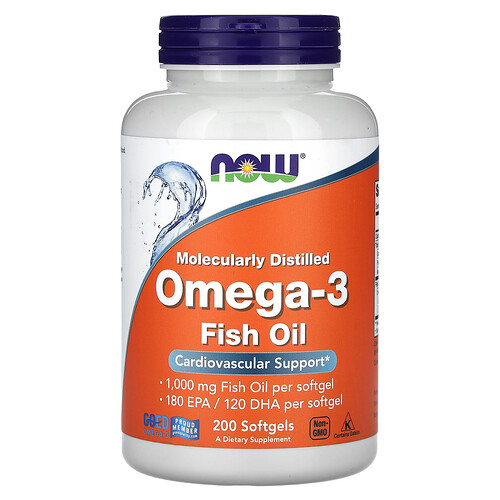
Best for: For shoppers seeking a simple, lower-cost softgel starting point.
Pros
- 200-softgel count
- €17.72 price point
- 4.8/5 from 176,194 reviews
Cons
- EPA and DHA amounts are not disclosed in the supplied details
- No added flavor or nutrient is specified
What to watch: Check the full EPA and DHA breakdown, serving size, and other ingredients before comparing it with concentrated formulas.
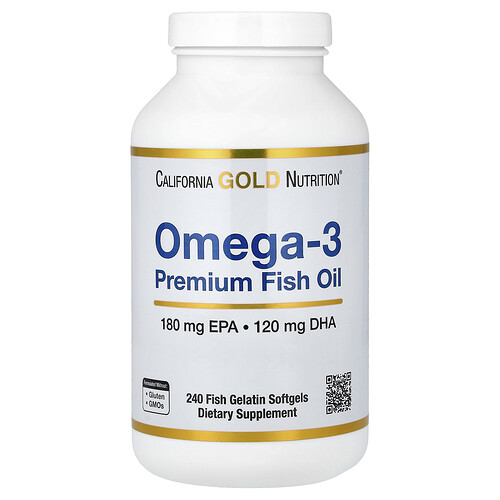
Best for: For someone who prefers a larger softgel count and fish-gelatin capsule format.
Pros
- 240 fish gelatin softgels
- 4.8/5 from 488,976 reviews
- Moderate price tier at €25.25
Cons
- EPA and DHA amounts are not disclosed in the supplied details
- Fish gelatin may not suit every dietary preference
What to watch: Confirm the capsule ingredients and EPA-to-DHA amounts if gelatin or a specific omega-3 target matters to you.
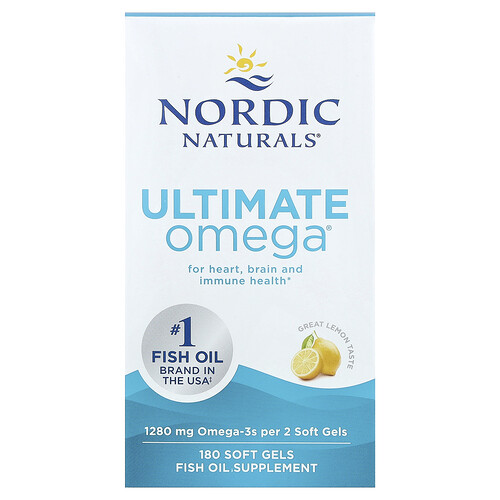
Best for: For shoppers who want a disclosed 640 mg amount per softgel and lemon flavor.
Pros
- 640 mg per softgel is stated
- Natural lemon flavor
- 4.8/5 from 24,343 reviews
Cons
- Higher price tier at €76.57
- The supplied details do not give the EPA and DHA split
What to watch: Confirm whether the stated 640 mg refers to your intended serving and review the complete EPA and DHA panel.
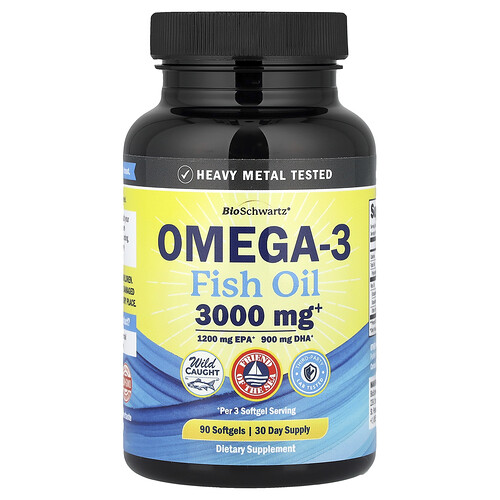
Best for: For label readers interested in a product with a clearly stated 3,000 mg headline.
Pros
- 3,000 mg amount is stated
- Natural lemon flavor
- €25.18 price point
Cons
- The supplied details do not clarify whether 3,000 mg is per serving
- EPA and DHA amounts are not disclosed
What to watch: Do not equate the 3,000 mg headline with active EPA and DHA until the serving size and full breakdown are confirmed.
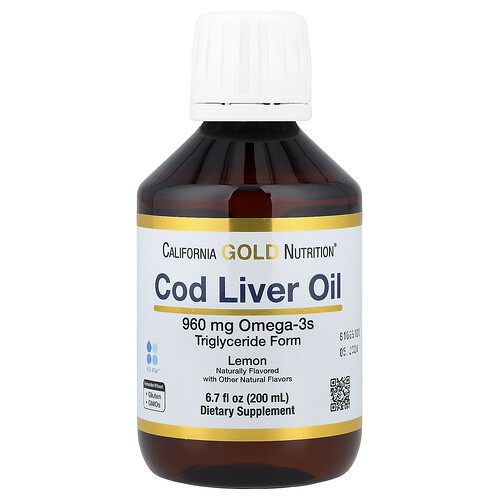
Best for: For someone specifically considering a liquid cod liver oil with vitamins A and D.
Pros
- 200 ml liquid format
- EPA, DHA, vitamin A, and vitamin D are listed
- Natural lemon flavor and €16.93 price point
Cons
- Not a plain fish oil formula
- The supplied details do not disclose the vitamin amounts
What to watch: Check total vitamin A and D intake and ask a clinician before use if you take medicines or already use fat-soluble vitamins.
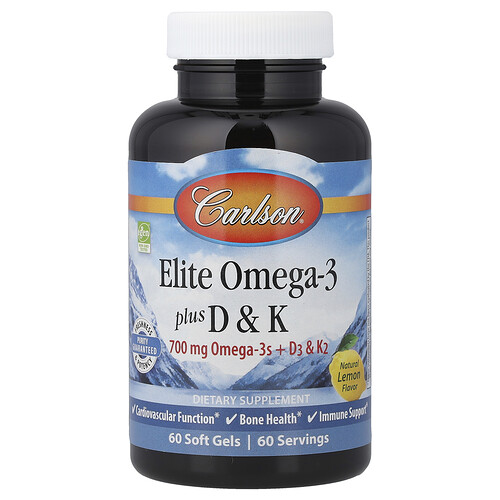
Best for: For shoppers who want omega-3 combined with vitamins D and K in a compact bottle.
Pros
- Vitamin D and K are included
- Natural lemon flavor
- 4.9/5 from 3,190 reviews
Cons
- Only 60 softgels
- Higher price per softgel at €43.09
- Omega-3 and vitamin amounts are not disclosed in the supplied details
What to watch: Review vitamin D and K amounts and check for medicine interactions, especially if you use anticoagulants.
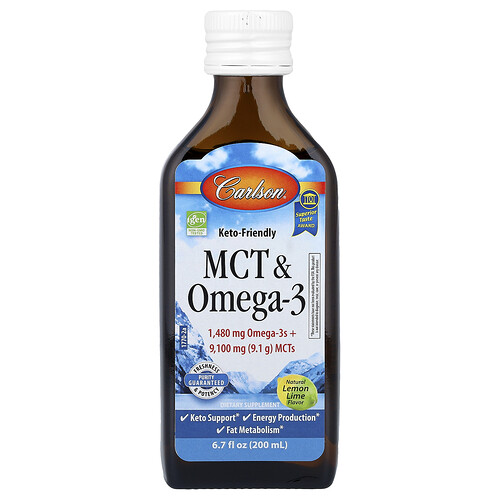
Best for: For people who prefer a lemon-lime liquid and are comfortable with an added MCT oil.
Pros
- 200 ml liquid format
- Natural lemon-lime flavor
- €24.44 price point
Cons
- Includes MCT oil, so it is not a plain fish oil
- EPA and DHA amounts are not disclosed
What to watch: Check the serving measure, storage directions, and whether the added MCT oil fits your dietary routine.
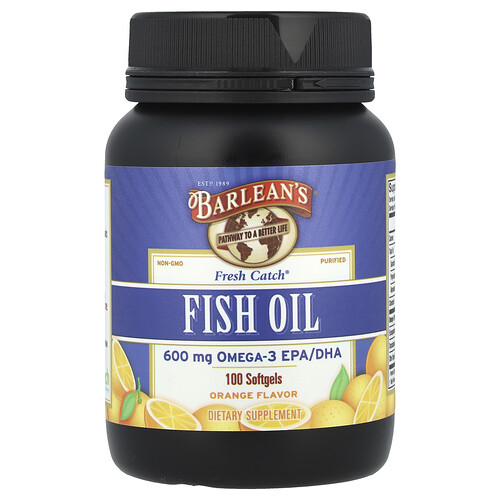
Best for: For shoppers who want orange flavor and a stated 300 mg amount per softgel.
Pros
- 300 mg per softgel is stated
- Natural orange flavor
- Lower price point at €16.62
Cons
- 100-softgel count
- 4.7/5 from 502 reviews
- The supplied details do not give the EPA and DHA split
What to watch: Confirm what the stated 300 mg represents and check the serving size before using it to meet a specific omega-3 intake.
For this 2026 selection, I looked only at the information supplied for each product: its stated format, dosage or count, flavor, added vitamins or oils, price, rating, and review volume. I did not treat popularity as proof of purity or medical benefit, and I have not added claims about freshness, sourcing, testing, oxidation, or absorption where those details were not disclosed.
The result is a practical spread rather than a single winner. Some cards suit a lower-cost entry point, some make the serving information easier to interpret, and others are here because a liquid format or added nutrient may fit a particular routine. The right choice is the one whose label you can understand and whose use feels sustainable enough to continue.
How did I choose these fish oil omega-3 supplements?
I chose products that offer a clearly different reason to consider them, rather than repeating the same capsule formula eight times. The shortlist covers value, capsule count, stated per-softgel amount, liquid formats, flavor, and formulas that include additional nutrients.
A few cautions shaped the ranking. The supplied data does not disclose EPA and DHA amounts for every product, so I have not assumed that a total oil figure equals the active omega-3 content. Where a product includes vitamin A, vitamin D, vitamin K, or MCT oil, that addition may be useful for some routines but is not automatically an advantage for everyone.
Ratings and review counts can help show how widely a product has been purchased, but they are not a substitute for a clinician's advice or a complete supplement label. I would still check the serving size, EPA and DHA amounts, other ingredients, allergen information, and storage guidance before buying.
What should you compare on a fish oil label?
Start with the serving size and the amount of EPA and DHA, if disclosed, rather than comparing only the total milligrams of fish oil. Then check the capsule material, flavoring, added vitamins, suggested storage, and any ingredients you already avoid.
This distinction matters because one product may state 3,000 mg of fish oil while another highlights a smaller amount of omega-3 per softgel. Those numbers are not interchangeable. The supplied product information does not provide a complete EPA-to-DHA breakdown for every option here, so a shopper with a specific intake target should confirm the full label or ask a qualified healthcare professional.
The word “natural” or a flavor description also does not tell you everything about the formula. Lemon, orange, or lemon-lime notes may make a routine more comfortable, but they do not establish freshness or suitability. For anyone with an allergy, dietary restriction, or sensitivity to fish gelatin, the capsule and ingredient panel deserve a slower read.
Are liquid fish oil supplements better than softgels?
No format is universally better; liquid fish oil can be easier for people who dislike swallowing capsules, while softgels offer measured, portable portions. The more comfortable format is usually the one that makes consistent use feel seamless without creating extra waste or storage stress.
Liquid options can be practical in a breakfast ritual, but they require attention to serving measurement and storage after opening. A bottle may also be less convenient for travel than a softgel pack. Softgels are tidy and familiar, although they can be difficult for people who dislike the texture or who need to take several capsules.
Flavor is another personal detail, not a promise of performance. Lemon, orange, lemon-cream, and lemon-lime profiles appear in this selection, but the supplied data does not tell us how each one tastes in practice. If flavor is the deciding factor, choose a smaller format first when possible and follow the package directions rather than improvising a serving.
Does a higher fish oil number mean a higher omega-3 dose?
Not necessarily, because total fish oil and the combined EPA-plus-DHA amount are different label details. A stated total such as 1,000 mg or 3,000 mg should not be treated as a confirmed EPA and DHA dose unless the label supplies that breakdown.
This is why the products with a disclosed amount per softgel are easier to compare at a glance, while products with a larger headline number still need a closer label check. The same care applies to concentrated formulas: “ultra,” “platinum,” or “advanced” wording is not enough to establish the actual dose.
If you take prescription medicines that affect bleeding, have a planned procedure, are pregnant or breastfeeding, or are managing a health condition, ask your doctor or pharmacist before adding fish oil. A supplement is not a medicine, and medical decisions belong with a qualified professional.
Are added vitamins or oils worth choosing?
Added nutrients or oils are worth considering only when they serve a clear purpose in your routine and do not duplicate something you already take. A combined formula can simplify a cabinet, but it can also make your total intake harder to track.
Cod liver oil brings vitamin A and vitamin D alongside EPA and DHA, while another option combines omega-3 with vitamins D and K. Those additions are meaningful label differences, not automatic upgrades. Vitamin A, vitamin D, and vitamin K can be unsuitable or require extra caution for some people, including those taking certain medicines, so a clinician should guide any targeted use.
MCT oil changes the character of a liquid formula without turning it into a substitute for a balanced diet. If you already use a multivitamin or separate fat-soluble vitamins, compare the labels together before creating a layered routine.
Which fish oil omega-3 supplement offers the best starting point?
I would start with position 1 for a shopper who wants a straightforward, lower-cost softgel option and plans to verify the EPA and DHA breakdown before buying. It is not automatically the strongest choice, and it does not solve every preference, but it gives the clearest everyday entry point in this ranking.
For a capsule-sensitive routine, I would move toward one of the liquid options; for a disclosed per-softgel amount, I would look at the card that states 640 mg per softgel. Whichever format you choose, keep the bottle or pouch stored as directed, use the serving information rather than the front-label headline, and reassess the ritual if it becomes difficult to maintain.
This article is not medical advice. Food supplements replace neither a balanced diet nor treatment — if you have symptoms, your doctor decides.
Ad · affiliate links · If you buy through these links, we earn a commission.