Mitochondrial Lipid Transport: L-Carnitine Formulations and Metabolic Efficacy
Lipid metabolism requires mitochondrial transport. This analysis evaluates specific carnitine formulations against standard metabolic claims.

Consumers frequently query green tea extract weight loss dosage parameters. The physiological mechanism of green tea extract relies on epigallocatechin gallate (EGCG) inhibiting catechol-O-methyltransferase. This inhibition prolongs sympathetic nervous system signaling, thereby increasing lipolysis. However, lipolysis merely releases fatty acids into the bloodstream. Actual lipid oxidation requires the transport of these fatty acids into the mitochondrial matrix. This transport mechanism is entirely dependent on carnitine. Green tea extract increases the signaling for lipolysis; L-carnitine facilitates the subsequent beta-oxidation. Evaluating one compound without understanding the requirement for the other demonstrates a fundamental misunderstanding of cellular respiration.
At a glance
| Product | Price | Rating | Best for |
|---|---|---|---|
| California Gold Nutrition Acetyl-L-Carnitine 500 mg | €18.18 | ★★★★★ 4.7 · 3,494 reviews | Indicated for users requiring blood-brain barrier penetration and central nervous system distribution. |
| NOW Foods Sports Liquid L-Carnitine Citrus | €20.03 | ★★★★★ 4.7 · 1,882 reviews | Formulated for peripheral tissue distribution and skeletal muscle lipid transport. |
Our picks: Carnitine Formulations for Lipid Transport
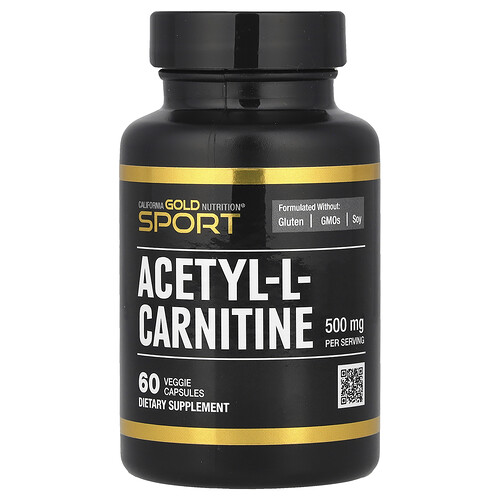
Indicated for users requiring blood-brain barrier penetration and central nervous system distribution.
Pros
- Acetylated molecular structure.
- Crosses the blood-brain barrier.
- Standardized 500 milligram capsule dosing.
Cons
- Capsule matrix delays peak plasma concentration.
- Lower total volume compared to liquid formulations.
What to watch: Concurrent administration with serotonergic compounds requires physician monitoring.
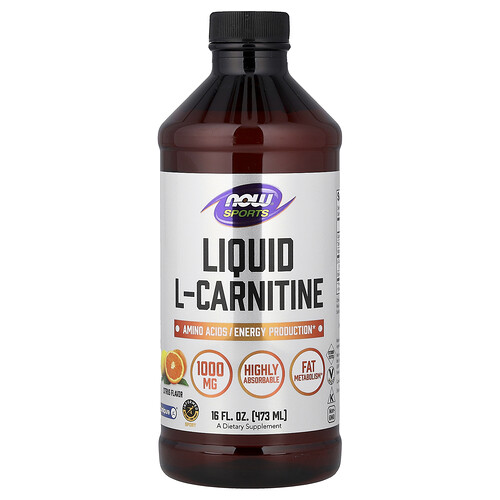
Formulated for peripheral tissue distribution and skeletal muscle lipid transport.
Pros
- Aqueous solution accelerates gastric emptying.
- Free-form L-carnitine targets peripheral CPT1 receptors.
- High yield per volumetric dose.
Cons
- Lacks acetyl group for neurological distribution.
- Citrus flavoring introduces unnecessary excipients.
What to watch: Liquid solutions degrade rapidly upon oxidation; requires strict temperature control after opening.
The selection of a carnitine formulation requires strict adherence to biochemical realities. Market availability includes liquid suspensions, crystalline powders, and encapsulated formats. Formulations are evaluated here based on molecular weight, delivery matrix efficiency, and specific carnitine esterification. Base L-carnitine targets peripheral tissues. Acetylated L-carnitine targets the central nervous system.
Furthermore, the pharmacokinetic limitations of oral carnitine dictate formulation efficacy. Intestinal absorption is mediated by the organic cation/carnitine transporter 2 (OCTN2). This transporter saturates at relatively low doses. Consequently, high-volume single doses yield diminishing returns and increase the production of trimethylamine (TMA) by gut microbiota. Precise dosing and specific molecular formats are non-negotiable variables.
Does oral carnitine supplementation guarantee lipid oxidation?
No. Oral carnitine exhibits low bioavailability, typically between 14% and 18%. It requires a high insulin index for maximum skeletal muscle retention. Administration without concurrent carbohydrate ingestion yields negligible intracellular accumulation. The compound merely provides the transport shuttle; it does not spontaneously increase the metabolic rate or force the body to utilize lipids in the absence of an energy deficit.
What differentiates acetyl-L-carnitine from base L-carnitine?
Acetyl-L-carnitine (ALCAR) contains an acetyl group that allows the molecule to cross the blood-brain barrier. Base L-carnitine is restricted entirely to peripheral tissues. ALCAR influences neurological function, provides an acetyl moiety for acetylcholine synthesis, and supports cerebral energy metabolism. Base L-carnitine strictly modulates peripheral lipid transport in skeletal and cardiac muscle tissue.
What is the optimal dosage protocol for metabolic transport?
Pharmacokinetic data suggests 1,000 to 2,000 milligrams daily, divided into two distinct doses. Absorption reaches saturation at approximately 2,000 milligrams per single administration. Exceeding this threshold increases renal clearance and gastrointestinal distress without any additional metabolic benefit. Titration must align with the saturation limits of the OCTN2 transporter.
Which formulation meets biochemical requirements?
The California Gold Nutrition Acetyl-L-Carnitine provides the acetylated ester necessary for systemic distribution, specifically targeting neurological tissue. The NOW Foods Liquid L-Carnitine offers an aqueous base matrix suitable for peripheral tissue targeting. Selection depends strictly on the target tissue: central nervous system versus skeletal muscle. Consumers seeking peripheral lipid transport should acquire the liquid base. Consumers requiring blood-brain barrier penetration must select the acetylated capsule.
This article is not medical advice. Food supplements replace neither a balanced diet nor treatment — if you have symptoms, your doctor decides.
Ad · affiliate links · If you buy through these links, we earn a commission.