Vegan matte lipstick vs lip stain: choosing your ideal finish
The choice between a vegan matte lipstick and a lip stain is rarely just about color.
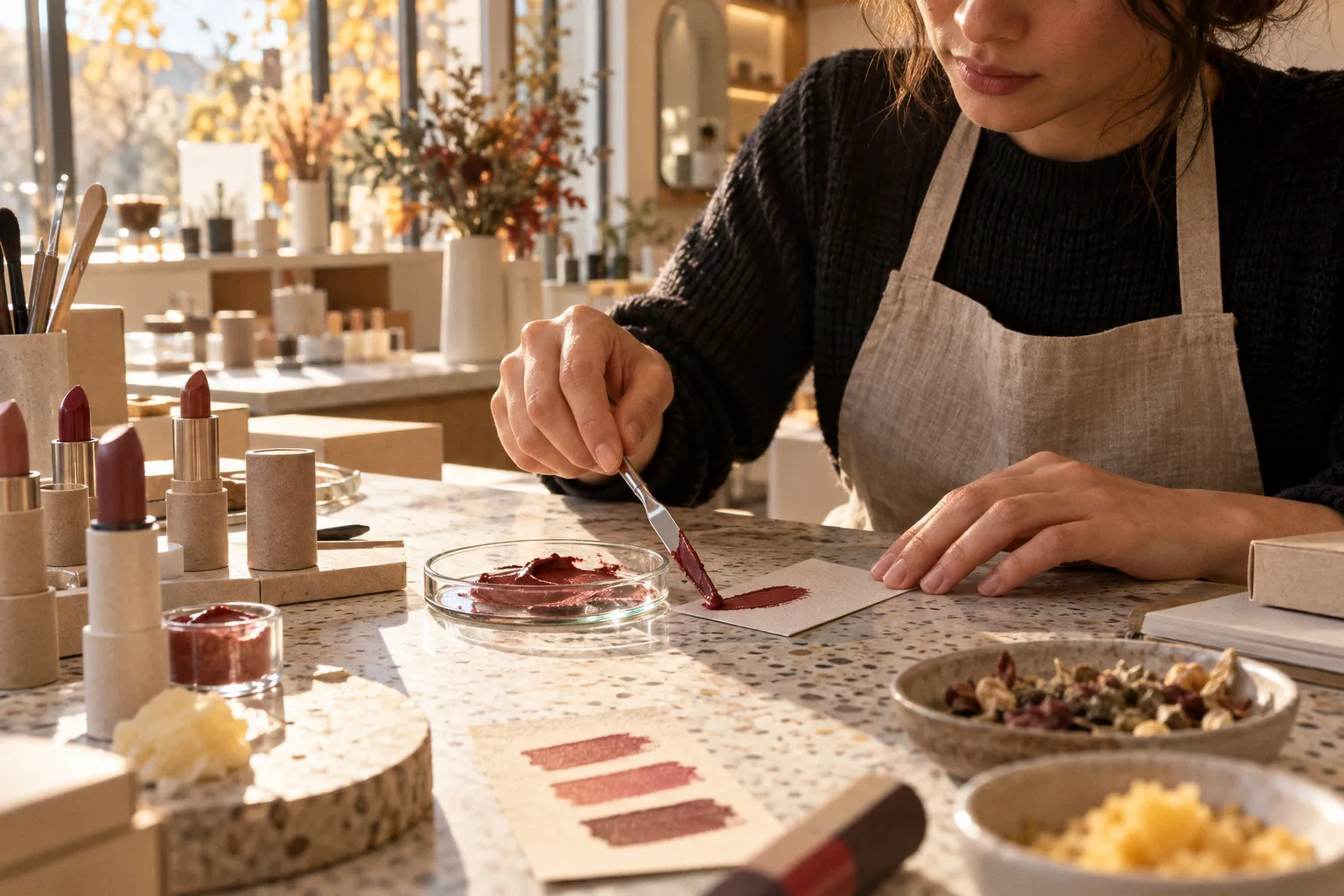
It is usually a question of how you want your lip product to behave throughout the day: stay visibly present and polished, or quietly become part of your lips without asking for much maintenance.
For long wear, both formulas can perform beautifully, but they solve different problems. A vegan matte lipstick gives you pigment, structure, and the ability to reshape the look with a liner or brush. A lip stain offers a lighter feel and transfer-resistant color that can remain visible after surface shine and moisture have faded. The better option depends on your comfort threshold, your daily routine, and whether you want the product to sit on the lips or settle into their top layer.
When I compare these formulas in a conscious beauty routine, I do not treat longevity as a simple race. A product that lasts for hours but leaves the lips tight may be less useful than one that needs a small midday refresh and still feels nourishing. Clean beauty lip color longevity is about the whole lifecycle of the product on your lips: application, comfort, fading, reapplication, and what remains at the end of the day.
The formula difference: plant-based waxes versus a true stain
A vegan matte lipstick is designed to remain on the surface of the lips. Its structure usually comes from plant-based waxes and oils rather than animal-derived binders such as beeswax or lanolin. Candelilla wax is one common plant-based alternative, helping the bullet hold its shape while giving the formula enough glide to distribute pigment evenly.
The result is a familiar lipstick experience: concentrated color, fuller coverage, and a defined edge. You can apply it directly for a softer look, use a lip brush for precision, or pair it with a non-toxic lip liner to create a more architectural finish. The formula is visible as a layer, which is precisely why it can offer so much versatility.
A lip stain behaves differently. It is generally built on a liquid or gel base, with color designed to settle into the upper surface of the lips. Rather than leaving the entire pigment load sitting on top, the formula creates a tint that remains visible as moisture, shine, and some of the surface product wear away.
This distinction explains much of the difference between the two:
| Feature | Vegan matte lipstick | Lip stain |
|---|---|---|
| Main color effect | Opaque, concentrated coverage | Sheer to buildable tint |
| Where the product sits | Primarily on the lip surface | Settles into the top layer of the lips |
| Finish | Matte or soft matte | Can be glossy, satin, soft-focus, or naturally tinted |
| Feel | More substantial and makeup-like | Lightweight, often barely there |
| Touch-ups | May need reshaping or reapplication | Usually easier to refresh with balm or gloss |
| Best strength | Bold, polished color | Low-maintenance color that fades gradually |
| Common concern | Drying effect or visible texture | Uneven fading on dry or patchy lips |
Not every lip stain is matte. Some begin as glossy or cushiony formulas and gradually leave behind a soft tint. That makes the term “stain” less about the finish and more about how the color wears.
A matte lipstick gives you control over the look; a stain gives you freedom from watching it.
Comfort comes before the finish
The most flattering matte lipstick application begins before the color. Traditional matte formulas can create a drying effect, particularly when the lips are already dehydrated or textured. This does not mean every vegan matte lipstick will feel uncomfortable, but it does mean the formula has less room to hide a neglected lip surface.
In my own routine, I treat lip preparation as a short ritual rather than a corrective emergency. A small amount of clean lip balm applied ahead of time can soften the surface. If the lips have visible flaking, a gentle lip exfoliation may help, but aggressive scrubbing usually creates more irritation than smoothness. The goal is not to polish the lips until they feel perfectly flat. It is to create enough softness for the pigment to move evenly.
A useful sequence is:
1. Apply a nourishing balm and let it sit for a few minutes.
2. Blot away excess slip before applying matte color.
3. Smooth the edges with a clean fingertip or lip brush rather than layering more product over dry patches.
4. Add a very thin second layer only where coverage is needed.
5. Keep a balm nearby for later, especially if the formula feels increasingly tight.
This preparation makes a noticeable difference to the non-toxic matte lipstick benefits people often look for: rich pigment, a clean outline, and a finish that does not immediately emphasize every line.
Lip stains need preparation too, although for a different reason. Because the color settles into the upper surface of the lips, it can collect around dry areas and create a patchier fade. A stain may feel lighter than a lipstick while still revealing uneven texture. Hydrating lip stain ingredients—such as vegetable oils, emollient esters, or other conditioning components—can improve the feel, but the exact experience depends on the complete formula rather than one attractive ingredient on the label.
If your lips are sensitive, a stain is not automatically the gentler choice. Some liquid formulas can feel fresh and weightless; others may feel drying as the carrier evaporates. The only reliable approach is to assess the product as a whole and pay attention to how your lips feel several hours after application, not just during the first minute.
Vegan matte lipstick vs lip stain for long wear
When someone asks me which product lasts longer, I first ask what they mean by “lasts.” Do they want the original opaque color to remain unchanged? Do they want a visible tint after coffee? Or do they want to avoid a ring of pigment around the lip line?
These are different forms of longevity.
A vegan matte lipstick can provide a strong initial payoff and a polished finish, but eating, drinking, and lip contact gradually remove the product from the surface. The wear pattern depends on the formula, how much was applied, whether the lips were moisturized underneath, and whether the product is a classic bullet, liquid matte, or hybrid texture.
A stain is usually less dramatic at the beginning but can remain perceptible after the surface layer has faded. This is where its transfer-resistant character becomes useful. The color does not necessarily remain unchanged, and it may fade more quickly from the center of the lips, but it can leave a soft veil of pigment behind rather than disappearing all at once.
Some high-performance glossy or liquid lip stains make claims of up to 12-hour wear. I treat that number as a performance claim under specific conditions, not a universal promise. Meals, oil-based foods, lip balm, natural moisture, and the condition of the lip surface can all change the result. No responsible comparison can guarantee the same wear time for every person or every shade.
For practical use, the difference looks like this:
- Choose a matte lipstick when the first application matters most: a defined lip, strong color, and a finish that looks intentionally made up.
- Choose a stain when the later stages of wear matter most: less product transfer, a lighter feel, and color that can remain visible as the day moves on.
- Choose a layered approach when you want both: apply a stain for a base, then add a small amount of vegan matte lipstick at the center or along the contour.
The layered method can be especially helpful for people who like a refined lip but do not want to keep rebuilding the entire shape. A stain creates a gentle foundation, while a small amount of lipstick restores dimension and opacity where it counts.
Colorants, carmine, and what “vegan” actually tells you
A vegan lip product excludes animal-derived ingredients. In conventional red and berry lip products, that distinction often matters because carmine—a red dye produced from crushed cochineal insects—is commonly used to create vivid color. Vegan formulas replace it with mineral pigments or plant-derived colorants.
That substitution is meaningful, but “vegan” does not describe every quality of a formula. It does not automatically mean the product is hydrating, organic, fragrance-free, hypoallergenic, or suitable for every sensitive lip. It tells you that animal-derived ingredients are absent.
Cruelty-free means something different. A cruelty-free product indicates that animal testing did not occur during development, while a vegan product addresses the ingredients themselves. A formula can be vegan without meeting every cruelty-free standard you personally follow, and a cruelty-free lipstick may still contain beeswax, lanolin, or carmine.
This is why I read the claims as separate pieces rather than treating them as interchangeable labels:
- Vegan: no animal-derived ingredients.
- Cruelty-free: no animal testing during product development, according to the brand’s stated standard.
- Clean: a less consistently defined category that usually refers to a brand’s ingredient exclusions or formulation philosophy.
- Certified organic: a regulated claim only when supported by the relevant certification and percentage requirements.
Some certified clean formulations contain up to 45% certified organic ingredients, but the presence of an organic component does not make the entire product organic. The distinction matters when you are trying to understand the actual formulation rather than relying on a front-label impression.
Mineral pigments also deserve a calm, precise explanation. They are widely used in vegan lip color, but it is not accurate to say that all natural mineral pigments are completely free from trace elements simply because they are natural. Cosmetic regulations address permitted levels of impurities, and the responsible question is whether the finished product meets the applicable safety requirements and whether the brand provides adequate formulation information.
Which finish fits your daily routine?
A product can be beautifully formulated and still be wrong for your rhythm. I see this often in professional beauty routines: someone chooses the most intense finish because it looks impressive in a swatch, then avoids wearing it because the application feels too demanding. The best lip color is usually the one that fits seamlessly into the moments when you actually need it.
For a defined workday lip
A vegan matte lipstick is the stronger choice when you want a clear outline and concentrated color without adding several layers of product. It works particularly well with a non-toxic lip liner, which can refine the edges and make the result feel more deliberate.
This combination also gives you more control over proportion. You can slightly soften the cupid’s bow, emphasize the center, or create a blurred edge without changing the lipstick itself. A stain can be layered for intensity, but it is less forgiving if it dries quickly or settles unevenly.
For commuting, errands, and low-maintenance days
A lip stain makes sense when you do not want to carry a mirror everywhere. It can be applied with less precision, especially in softer shades, and the gradual fade is generally easier to live with than a partially worn opaque lipstick.
A natural lip oil or clean lip balm can be added on top when the lips need comfort. The finish may become glossier, but the underlying tint can remain, creating a more relaxed version of the original color.
For dry or easily irritated lips
Neither category wins automatically. A creamy vegan matte lipstick may feel more comfortable than a very quick-drying stain, while a conditioning stain may feel better than a rigid matte formula. Look for a product that gives the lips some flexibility and avoid judging comfort solely by the word “hydrating” on the packaging.
The most useful test is temporal: how do the lips feel after the product has been worn for several hours? Tightness, stinging, or persistent flaking are more relevant than a soft first impression.
For events and photographs
Matte lipstick usually offers the more predictable visual payoff. Its pigment sits on the surface, so the color remains more opaque and the lip shape stays easier to read. A stain can look beautiful in photographs too, particularly when paired with gloss or balm, but it creates a more translucent effect.
If you want fuller-looking lips without relying on an aggressive plumping sensation, try placing a slightly lighter shade or a touch of clean lip gloss at the center. This creates dimension through light rather than irritation.
Longevity is not only the number of hours a color survives. It is how gracefully the product changes while you are wearing it.
Application techniques that improve wear
The formula matters, but application controls the final experience more than many people expect. A thick layer of matte lipstick can look heavy and break apart sooner than a thin, well-pressed layer. A stain applied over balm may glide beautifully but fail to settle evenly if too much slip remains on the surface.
For a vegan matte lipstick:
1. Start with smooth, comfortable lips rather than freshly scrubbed ones.
2. Remove excess balm so the lipstick has a stable surface.
3. Apply from the center outward, keeping the first layer thin.
4. Press the lips together gently, then add coverage only where needed.
5. Blot once if the formula feels overly creamy, but avoid repeated tissue pressing that can remove color from the edges.
For a lip stain:
1. Apply to clean, dry lips if the formula needs a dry surface to set.
2. Work in small sections before the product begins to settle.
3. Soften the inner edge with a fingertip for a diffused effect.
4. Allow the first layer to settle before deciding whether a second is necessary.
5. Finish with balm or gloss once the stain has developed, rather than mixing both products immediately.
If you are using a stain as a base under lipstick, let it settle first. Otherwise, the surface oils from the second product can disturb the color and make the result less even.
Shade also affects perceived longevity. Deeper berry, red, and brown pigments often remain noticeable after the top layer fades, while pale nude shades may seem to disappear sooner even if some color is still present. This is not necessarily a formula failure; it is partly an optical difference between pigment depth and the natural tone of the lips.
Maintenance: keeping the ritual pleasant
Lip products last longer when they are maintained as carefully as the lips themselves. Wipe the tip of a lipstick when it picks up balm or foundation, and keep the cap closed so the surface does not collect dust. For liquid stains and glosses, avoid leaving the applicator exposed for longer than necessary.
A clean lip balm can extend the usefulness of a matte lipstick by making touch-ups more comfortable. Rather than applying a new opaque layer over a dry, broken surface, remove what is loose, add a little balm, and rebuild the color lightly. This preserves the finish and prevents the familiar cycle of piling on more pigment until the lips feel coated.
The same principle applies to a stain. If the color has faded unevenly, adding another layer directly over dry patches can deepen the contrast. A small amount of balm, a gentle reset, and then a fresh wash of color usually gives a more seamless result.
I also recommend thinking about packaging as part of the product’s footprint. A formula that you enjoy and finish completely has a more satisfying lifecycle than an ambitious shade that sits unused because it is too difficult to wear. Sustainable beauty is not only about the ingredient list; it is also about choosing products that earn a consistent place in your routine.
My verdict: choose behavior, not the promise on the label
For bold, opaque color and a sculpted finish, I would choose a vegan matte lipstick. Plant-based waxes can create a stable, pigment-rich formula, and the product gives you the most freedom to define the lip. It is the better tool when visual impact and application control come first.
For lightweight comfort, gradual fading, and less visible transfer, I would choose a lip stain. Its color settles into the upper surface of the lips, so the result tends to feel less like a layer of makeup and more like a tint that belongs to the routine. It is especially useful when you want long-lasting clean lip products without committing to a fully opaque finish.
If your priorities are split, use both strategically: stain for the base, matte lipstick for structure, and balm or gloss for comfort. That combination respects the practical side of wear while leaving room for a nourishing, tactile ritual.
The best answer to vegan matte lipstick vs lip stain for long wear is not a universal winner. It is the formula whose texture, maintenance, and fading pattern suit the way you actually move through the day. Choose the product that gives you enough color, enough comfort, and enough longevity to keep reaching for it—not because the label made a dramatic promise, but because the whole experience feels right.
FAQ
What is the main difference between vegan matte lipstick and lip stain?
Which product lasts longer on the lips?
Does 'vegan' mean a lip product is hydrating or natural?
How can I prevent my matte lipstick from feeling drying?
Why does my lip stain look patchy?
Worth a read
 Conscious Lip CareVegan Matte Lipsticks: 5 Best Picks for Dry Lips
 Conscious Lip CareLip Oil vs Clean Lip Gloss: Which to Choose for Your Needs
 Conscious Lip CareClean lip liners: our smudge and feathering test
 Conscious Lip Care8 Magnesium Supplements for Sleep, Ranked by Formulation and Label Clarity